Who was Jack Verrall and Why a Garden?
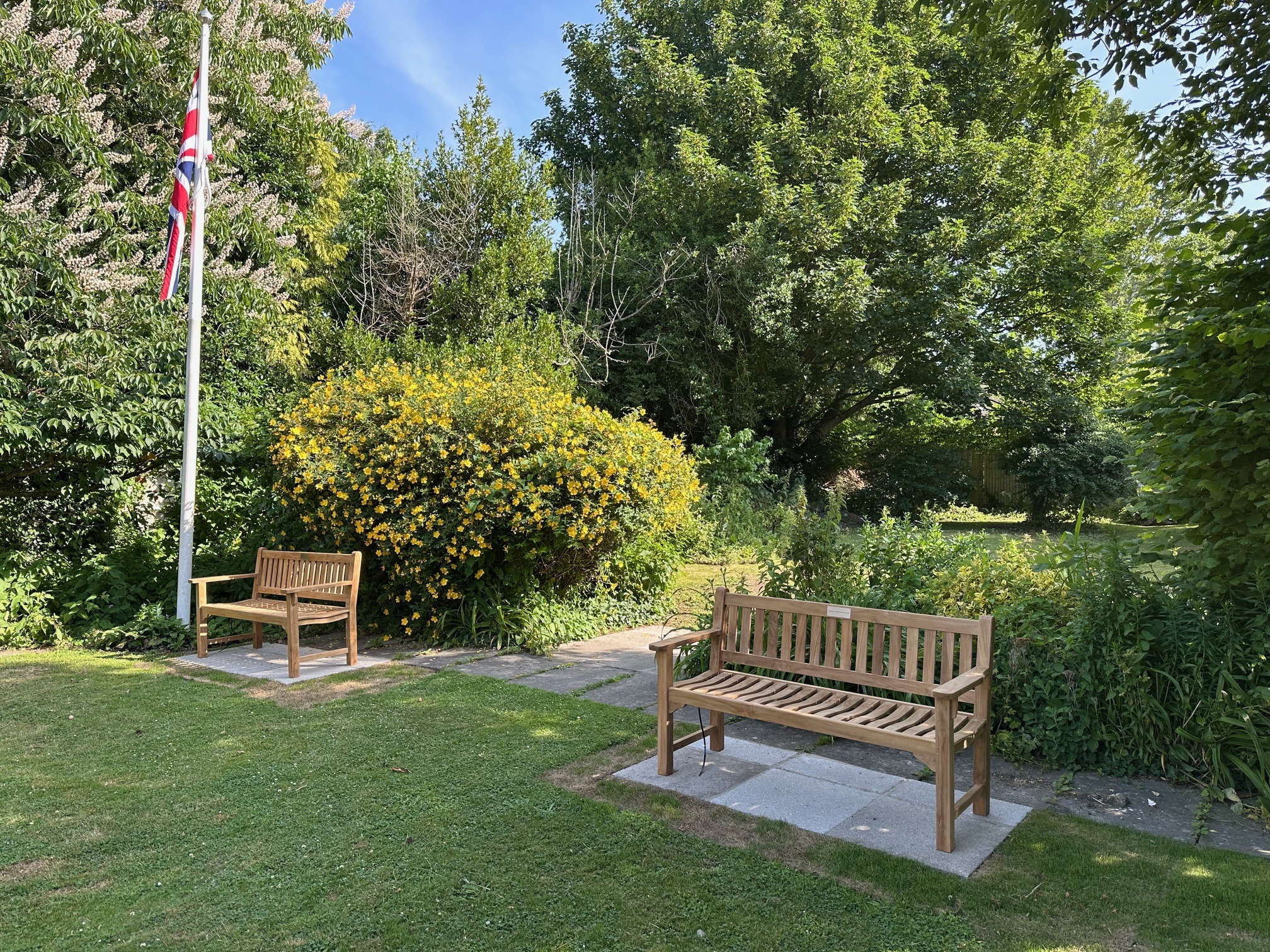
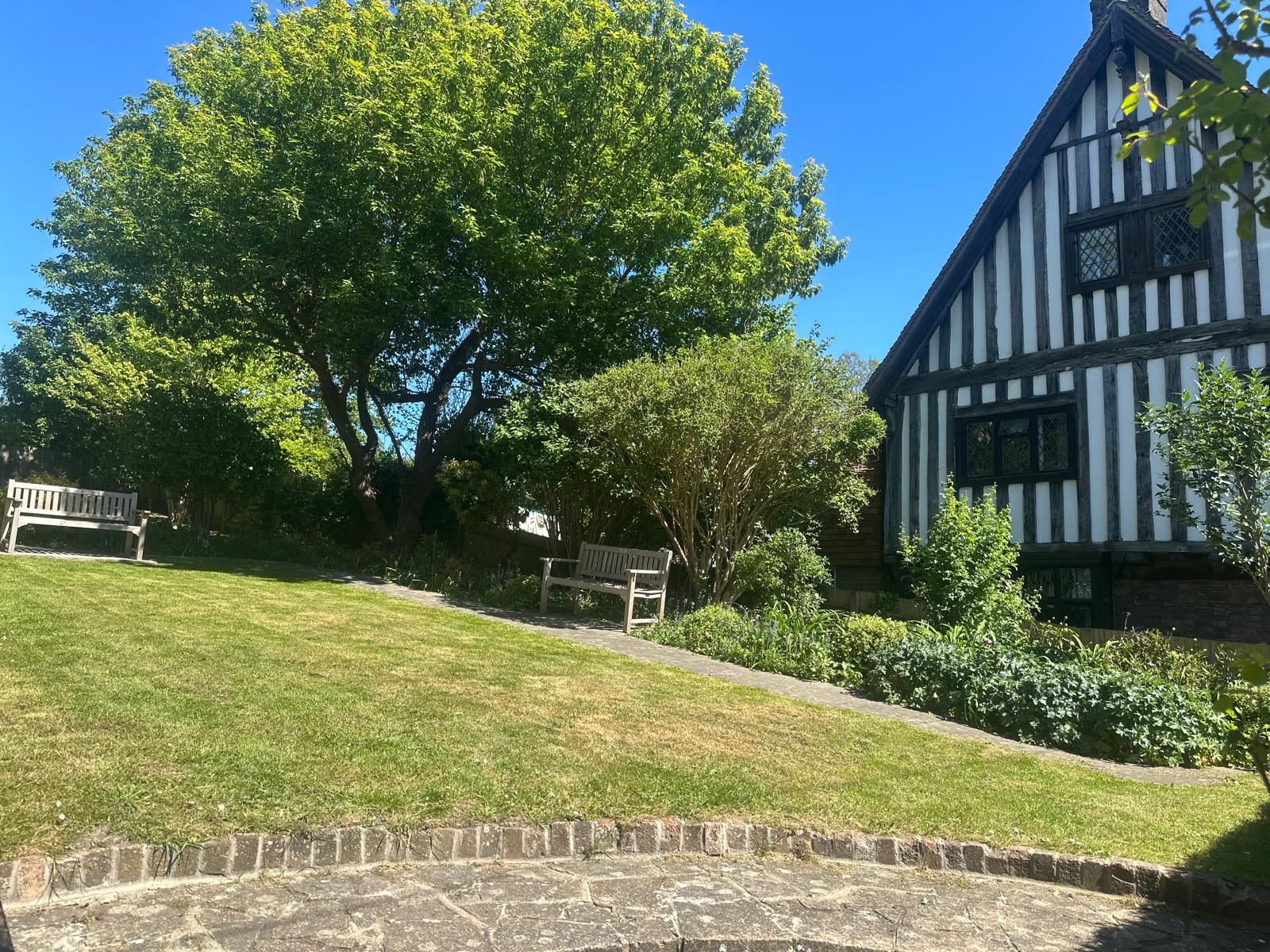
Bang opposite what was once The Rose and Crown pub in the heart of Brenchley, lies a secluded garden, accessed from the street under an arch built by the village blacksmith Dick Lee, draped in New Dawn pink roses. For many years Jack Verrall, a nearby tenant, spent his waking hours growing vegetables, which together with the local gossip, he shared daily, not only with passers by, but also especially with the chef of the pub.
Jack was born in Lamberhurst in 1915 but eight years later his family came to Brenchley, living just off the square. He went to the village school eventfully, in the same class was a young and pretty Elsie Chantler. Whilst at school always active, he fell from a tree in private Broad Oak, injuring his back permanently. In spite of that he left school aged 14 to work for his father, a timber haulage contractor, as a timber feller, but in1935 after a major disagreement with his father he took the 'King's Shilling' and became a Grenadier Guardsman, serving abroad in Egypt as well as London. It was there, in the city, that remarkably he again met Elsie, working in service, Nature took its course and they married in 1938, moving to Walnut Tree, meanwhile reconciled he went back to work for his father.
Hardly had they settled down than war broke out. Naturally Jack tried to sign up, back into the Guards, but his trade skill was a restricted occupation. Anti aircraft gun sites were being quickly cleared through the woods of the South East and fellers of trees were in great demand. He was, however, allowed to sign on as a Home Guard, where, surprisingly, he met the American owner of Owthorpe, with its extensive gardens across the valley. Those gardens had been neglected during the war and a new opening for Jack as both chauffeur and gardener provided a home for the now enlarged family, a son, Michael having arrived earlier.
Jack had been constantly embarrassed by not serving in the forces, even trying to join the RAF, but the onslaught of the V1 Doodle Bug flying bombs meant that a new band of anti aircraft guns had to be installed across the South East, needing his skills even more.
Next they moved to the White House, latterly the doctor's surgery, when Jack worked for the dairy on Castle Hill. After the war Godfreys Engineering company in Petteridge provided a totally different employment and enabled him to move into No 10 The Old Palace, where he started taming the adjacent derelict garden plot.. He mixed gardening with odd jobbing for several years, before changing yet again to become the village post man.
Latterly his early injuries ultimately brought an end to such an activity, but his encyclopaedic knowledge of gardening and trees provided him with an income, for several years from landowners anxious to improve their estates .
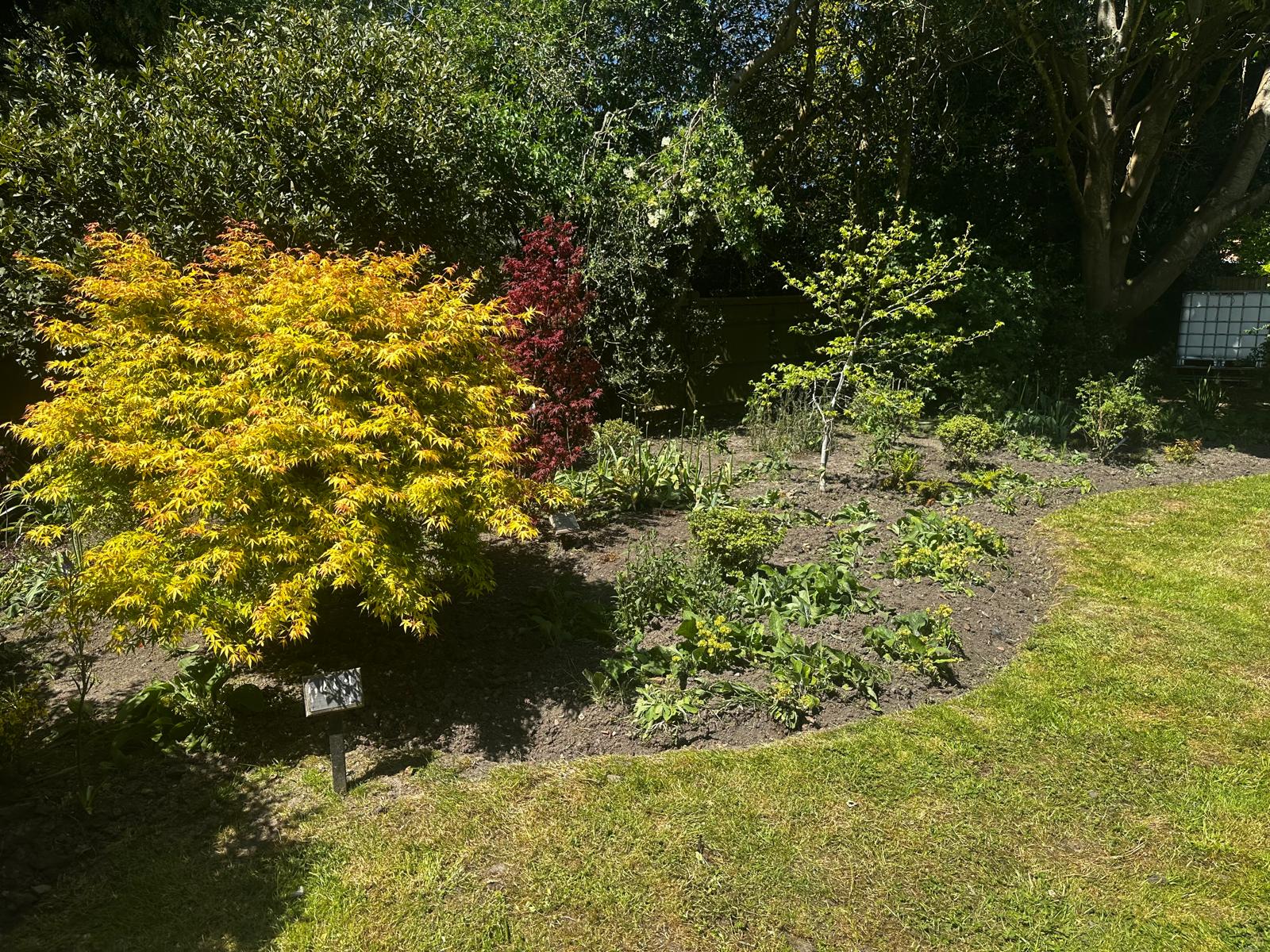
Throughout all that time Tonbridge Rural District Council owned the row of cottages: The Old Palace, until they were taken over by TWBC under government reorganisation. That council then sold all of its extensive Council House stock to various housing associations, raising a significant nest egg. The vacant plot of land, not lettable, was almost forgotten until three concerned residents proposed its adoption on behalf of the village, which had no 'Green', rather than allowing it to be developed by default. Money was raised from the drinkers in the then four local pubs for the hire of a mini digger to breach the ragstone wall, while surplus paving slabs were donated by yet another transatlantic resident Bob Currier to provide the arcing step entrance. The Horticultural Society was prevailed upon to undertake to help design and restore the plot and donate plants. TWBC Planning Service refused a Lytch gate entrance as inappropriate and confusing. Once completed TWBC was asked to officially open the site, sending a mayor to officiate. It was hoped that that ceremony and the specific naming of the site would protect it against any future change in use or purpose.
Paul Oliver-Smith